


Planting a Garden for Beginners
Planting a garden for beginners often feels intimidating long before the first seed is planted. Before diving into the how-to details, it is important to address the anxiety many people associate with starting a garden. Gardening has developed a reputation for being complex, filled with confusing terminology and conflicting advice. In reality, it is far simpler—plants want to grow. Your role is not to force them to thrive through complicated techniques, but to provide the basic conditions they need and avoid the common mistakes that interfere with their natural growth.
Why Planting a Garden for Beginners Is Easier Than You Think
Before diving into the how-to details, let’s address the anxiety many people feel about planting a garden for beginners. Gardening has developed an intimidating reputation, surrounded by complex terminology and conflicting advice. The reality is far simpler—plants want to grow. Your job isn’t to force them to thrive through complicated techniques, but rather to provide basic conditions they need and avoid common mistakes that prevent their natural growth.
Starting a garden for the first timeoffers rewards that extend far beyond the plants themselves. You’ll save money on groceries when growing vegetables and herbs. Fresh homegrown tomatoes, lettuce, and basil taste incomparably better than store-bought versions. The physical activity of gardening provides gentle exercise while reducing stress and improving mental health. Studies consistently show that spending time working with plants lowers blood pressure, reduces anxiety, and boosts mood.
For families, planting a garden for beginners creates outdoor learning experiences where children discover where food comes from, develop responsibility through plant care, and gain appreciation for nature. Kids who help grow vegetables are far more likely to eat them. The satisfaction of nurturing something from seed to harvest builds confidence and provides tangible proof of your efforts—something increasingly rare in our digital world.
Step 1: Choosing the Right Location for Planting a Garden for Beginners
Success in planting a garden for beginners starts with selecting an appropriate location. The right spot makes everything easier, while a poor location creates constant challenges that frustrate even experienced gardeners.
Sunlight is the most critical factor when starting your first garden. Most vegetables, herbs, and flowering plants need at least six to eight hours of direct sunlight daily. Observe your yard over several days, noting which areas receive full sun from morning through afternoon. Morning sun is particularly valuable because it dries dew from plants, reducing disease problems. Afternoon sun provides the intense light that drives vigorous growth and fruit production.
Don’t trust your memory or single observations—sun patterns change as seasons progress and as deciduous trees leaf out. That sunny April spot might be heavily shaded by June when trees have full foliage. Take photos at different times of day or mark sunny spots with stakes to ensure you’re choosing the brightest location available.
Water access is equally important when planting a garden for beginners. Your garden should be within comfortable reach of a hose or water source. Hauling watering cans long distances gets old quickly and often leads to inconsistent watering that stresses plants. If your sunniest spot is far from water, consider installing a rain barrel nearby or running a dedicated hose line before planting.
Proximity to your house affects how much attention your garden receives. A garden visible from kitchen windows or along your daily path gets noticed and cared for regularly. You’ll spot problems earlier, water more consistently, and enjoy watching daily progress. Tucked-away gardens often suffer neglect simply because they’re out of sight and mind.
Drainage matters tremendously when planting a garden for beginners. After heavy rain, walk through potential garden spots and observe where water pools or drains away quickly. Areas with standing water for hours after rain will drown most plants’ roots and promote disease. Slightly sloped ground with good drainage is ideal. If your only option has poor drainage, plan to build raised beds that elevate plants above problem soil.
Start small when planting a garden for beginners—far smaller than you think you need. A four-by-eight-foot bed or even a few containers provides plenty of space to grow significant amounts of food or flowers while remaining manageable. Many beginners plant gardens that are too large, become overwhelmed by maintenance, and quit in frustration. You can always expand next year if your small garden succeeds and you want more space.
Step 2: Deciding What to Grow When Planting a Garden for Beginners
Choosing appropriate plants is crucial when planting a garden for beginners. Focus on varieties known for being forgiving and productive rather than challenging specialty crops that frustrate even experienced gardeners.
Tomatoes top most gardeners’ wish lists when planting a garden for beginners, and for good reason. Homegrown tomatoes taste incomparably better than store-bought. Cherry tomato varieties are particularly beginner-friendly because they produce abundantly, resist many diseases, and thrive in containers if ground space is limited. Choose varieties labeled with disease-resistance codes for best results. One or two tomato plants provide enough fruit for fresh eating throughout summer for most families.
Lettuce and leafy greens offer quick results when planting a garden for beginners. They germinate quickly, grow rapidly, and can be harvested within a month of planting. You can harvest them continuously by cutting outer leaves while plants continue producing. They tolerate partial shade better than fruiting vegetables, making them perfect for spots that aren’t in full sun all day. Plant lettuce every two weeks for continuous harvests rather than one overwhelming crop.
Herbs provide incredible value when planting a garden for beginners. Basil, parsley, cilantro, chives, and mint are kitchen staples that cost significant money at grocery stores yet grow easily at home. Most herbs thrive in containers, requiring minimal space. They produce continuously when harvested regularly, providing fresh flavors all season from just a few plants. Fresh herbs taste exponentially better than dried store-bought versions, transforming everyday meals.
Zucchini and summer squash are almost foolproof when planting a garden for beginners. They grow quickly and produce prolifically—often more than families can eat. One or two plants typically provide adequate harvests. These vegetables teach important lessons about proper spacing because they spread significantly as they mature, showing beginners why following spacing recommendations matters.
Radishes offer almost instant gratification when planting a garden for beginners. They mature in just three to four weeks, providing quick success that builds confidence. Their rapid growth makes them perfect for tucking between slower-growing vegetables to mark rows and maximize space efficiency. Kids especially love growing radishes because results come so quickly.
Bush beans require no support and produce generous harvests when planting a garden for beginners. They’re more reliable than pole beans for first-time gardeners because they need no trellising. Plant them in succession every two weeks for continuous harvests rather than one overwhelming flush of beans all at once.
Avoid challenging crops your first year when planting a garden for beginners. Save melons, cauliflower, Brussels sprouts, and asparagus for future seasons after you’ve gained experience. These crops have specific requirements or long growing seasons that can frustrate beginners. Focus on easy, quick-growing plants that build confidence through success.
Choose plants you actually want to eat or look at when planting a garden for beginners. There’s no point growing vegetables your family dislikes, regardless of how easy they are. If nobody eats zucchini, don’t plant it just because it grows easily. Your garden should provide things you’ll use and enjoy.
Step 3: How to Prepare Healthy Soil
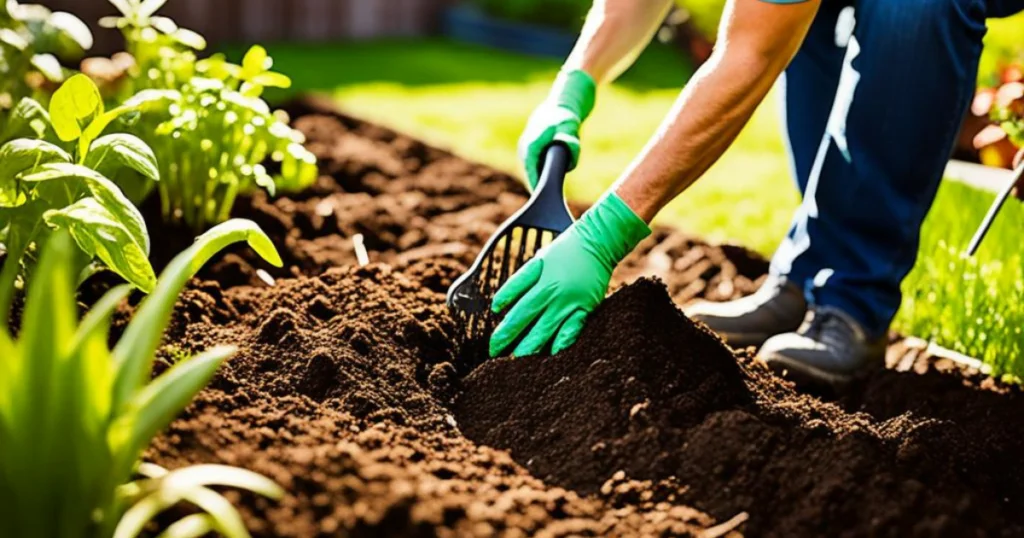
Proper soil preparation makes the difference between struggling plants and thriving ones when planting a garden for beginners. Healthy soil is the foundation of successful gardening—invest time here and everything else becomes easier.
Start by removing existing vegetation from your chosen garden spot when planting a garden for beginners. For lawn areas, you can strip sod with a flat spade, removing grass in sections. This is labor-intensive but gives immediate access to soil underneath. Alternatively, use the sheet mulching method—cover the area with cardboard or thick layers of newspaper, then pile six to eight inches of compost and other organic materials on top. The cardboard smothers grass while organic layers provide excellent growing medium. You can plant directly into this layered system.
Test your soil to understand what you’re working with when planting a garden for beginners. Simple home test kits from garden centers reveal pH levels and basic nutrient information. For more detailed analysis, send samples to your local agricultural extension office. They’ll test for pH, nitrogen, phosphorus, potassium, and other nutrients, providing specific amendment recommendations. This testing prevents guesswork and ensures you’re addressing actual needs rather than potential problems.
Add substantial organic matter when planting a garden for beginners. Compost is the gold standard—it improves soil structure, adds nutrients, introduces beneficial microorganisms, and increases moisture retention. Spread two to four inches of compost over your garden area and work it into the top eight to twelve inches of soil. This seems like a lot, but generous organic matter applications create dramatic improvements in soil quality.
If you don’t have access to finished compost when planting a garden for beginners, aged manure works well. Ensure it’s well-composted—fresh manure can burn plants. Bagged compost and composted manure from garden centers are convenient options for small gardens, though they’re more expensive than bulk deliveries for larger areas.
Mix amendments thoroughly into existing soil when planting a garden for beginners rather than just spreading them on top. This incorporation distributes organic matter and nutrients throughout the root zone. Use a garden fork or spade to turn and mix soil, breaking up clumps and removing rocks or debris. Soil is ready when it has a loose, crumbly texture that’s easy to work.
Never work soil when it’s too wet or completely dry when planting a garden for beginners. Wet soil forms clods that harden into brick-like chunks, ruining soil structure for months. Soil is ready to work when it’s moist enough to form a ball in your hand but dry enough that the ball crumbles easily when poked. This proper moisture level makes digging easier and protects soil structure.
Consider raised beds if your existing soil is severely compacted, contaminated, or consists of heavy clay when planting a garden for beginners. Build frames eight to twelve inches tall using untreated lumber, fill them with quality garden soil mixed with compost, and plant directly into this controlled environment. Raised beds warm up earlier in spring, drain better than ground-level gardens, and make gardening easier on your back. This approach eliminates the need for extensive soil improvement in difficult situations.
Step 4: Understanding Timing When Planting a Garden for Beginners
Timing is everything when planting a garden for beginners. Planting too early risks losing tender plants to late frosts, while planting too late shortens your growing season and reduces harvests.
Learn your area’s last expected spring frost date when planting a garden for beginners—this date defines when it’s safe to plant tender crops. Find this information from local garden centers, your county agricultural extension office, or online resources. This date is an average based on historical data, not a guarantee, but it provides essential guidance for timing your planting.
Cool-season crops tolerate cold soil and light frosts when planting a garden for beginners. Lettuce, spinach, peas, radishes, and other cool-season vegetables can be planted several weeks before the last frost date. These crops actually prefer cooler temperatures and may struggle or bolt to seed in summer heat. Plant them as early as soil can be worked in spring—typically when soil temperature reaches forty degrees Fahrenheit.
Warm-season crops need warm soil and air temperatures when planting a garden for beginners. Tomatoes, peppers, squash, cucumbers, and beans are tender plants damaged or killed by frost. Wait until after all danger of frost has passed and soil has warmed to at least sixty degrees before planting these crops. Planting them too early just means they sit without growing while being vulnerable to diseases that thrive in cool, wet soil.
Soil temperature often matters more than air temperature when planting a garden for beginners. Even if air is warm, cold soil prevents germination and root growth. Inexpensive soil thermometers take the guesswork out of timing. Check soil temperature at seed depth—if it’s below the minimum for your crop, wait a few more days regardless of what the calendar says.
Starting seeds indoors extends your growing season when planting a garden for beginners, but it’s not required for success. Garden centers sell transplants of most popular vegetables, providing instant progress without the effort of seed starting. If you do start seeds indoors, begin six to eight weeks before your last frost date for most crops. You’ll need containers, sterile seed-starting mix, and adequate light—either bright south-facing windows or grow lights.
Step 5: The Physical Process of Planting a Garden for Beginners
The actual planting process is straightforward when planting a garden for beginners if you follow basic guidelines and avoid common mistakes.
Read seed packets carefully when planting a garden for beginners—they contain essential information about planting depth, spacing, and days to maturity. Following these recommendations prevents overcrowding and ensures plants have room to develop properly. It feels wasteful leaving so much empty space initially, but plants fill in surprisingly quickly. Crowding leads to competition for water, nutrients, and light, resulting in poor growth and increased disease problems.
Plant seeds at the depth recommended on packets when planting a garden for beginners—generally two to three times the seed’s diameter. Seeds planted too deeply may never emerge because they exhaust energy before reaching the surface. Seeds planted too shallowly dry out quickly and fail to germinate. Make shallow furrows with your finger or a tool, drop seeds at the recommended spacing, cover with soil, and pat down gently to ensure good seed-to-soil contact.
Transplants require careful handling when planting a garden for beginners to avoid shocking plants or damaging roots. Water transplants in their containers thoroughly several hours before planting. Dig holes slightly larger than the root ball. Gently remove plants from containers by tapping the bottom and supporting the stem—never pull plants out by their stems. If roots are circling the root ball, gently tease them apart to encourage outward growth. Place transplants at the same depth they were growing, with the exception of tomatoes which benefit from deep planting that allows roots to form along buried stems.
Space plants according to recommendations when planting a garden for beginners, even though it seems like too much space initially. Mature plant size determines spacing—that tiny seedling will grow much larger. Proper spacing improves air circulation, reducing disease problems. It also ensures each plant gets adequate sunlight, water, and nutrients without competition.
Water thoroughly immediately after planting a garden for beginners to settle soil around roots and eliminate air pockets. This initial watering is critical for helping transplants establish and seeds germinate. Keep soil consistently moist but not waterlogged for the first week or two until plants show signs of new growth, indicating successful establishment.
Label your plants when planting a garden for beginners so you remember what you planted and where. It’s surprisingly easy to forget varieties after a few weeks. Simple wooden stakes, plastic labels, or popsicle sticks with plant names written in permanent marker work well. Include planting dates along with variety names to help you plan for future seasons.
Step 6: How to Water Plants Correctly
Proper watering is crucial when planting a garden for beginners and is the task that causes the most confusion. Too much water is as harmful as too little.
Water deeply but less frequently when planting a garden for beginners rather than giving plants frequent shallow drinks. Deep watering encourages roots to grow down into the soil, creating stronger, drought-resistant plants. Shallow watering keeps roots near the surface where they’re vulnerable to heat and drought. Most gardens need about one inch of water weekly, including rainfall. This might mean watering once a week in cool weather or twice weekly during hot, dry periods.
Check soil moisture before watering when planting a garden for beginners. Insert your finger two to three inches into the soil. If it feels dry at that depth, it’s time to water. If it’s still moist, wait another day or two. This simple test prevents both overwatering and underwatering, which are among the most common problems in planting a garden for beginners.
Water in the morning when possible when planting a garden for beginners. Morning watering gives foliage time to dry during the day, reducing disease problems caused by prolonged leaf wetness. It also ensures plants have adequate moisture going into the heat of the day when they need it most. If you forget and plants are wilting by afternoon, water anyway—the benefit of relieving water stress outweighs slightly increased disease risk.
Direct water to the soil rather than plant leaves when planting a garden for beginners. Soaker hoses or drip irrigation deliver water directly to roots where it’s needed while keeping foliage dry. If hand watering, aim the stream at the base of plants. This conserves water, reduces disease, and ensures moisture reaches roots rather than evaporating from leaves.
Mulch helps tremendously with watering when planting a garden for beginners. Spread two to three inches of organic mulch like straw, shredded leaves, or grass clippings around plants once they’re established. Mulch dramatically reduces evaporation, moderates soil temperature, suppresses weeds, and gradually adds organic matter as it decomposes. Don’t mulch immediately after planting small seeds—wait until seedlings are several inches tall so mulch doesn’t smother them.
Step 7: Basic Maintenance After Planting a Garden for Beginners
Planting a garden for beginners doesn’t end with getting plants in the ground. Regular maintenance keeps your garden healthy and productive.
Weeding is unavoidable when planting a garden for beginners but becomes manageable with consistent effort. Weeds compete with your plants for water, nutrients, and light. Pull them when they’re small, before they develop extensive root systems or produce seeds. A few minutes of weeding several times per week is far easier than letting weeds take over and facing hours of catch-up work. Mulching suppresses most weeds, making this task much easier.
Fertilizing replenishes nutrients plants remove from soil when planting a garden for beginners. If you incorporated plenty of compost during soil preparation, plants may need little additional fertilizer for the first year. When plants show signs of nutrient deficiency—yellowing leaves, poor growth, or few flowers—side-dress with additional compost or use a balanced organic fertilizer according to package directions. Container plants need more frequent fertilization than in-ground gardens because nutrients leach out with watering.
Monitor for pests and diseases when planting a garden for beginners by walking through your garden regularly. Examine leaves for chewed holes, discolored spots, or insects. Many pest problems are minor and can be handled by picking off offending insects or removing affected leaves. Catching problems early prevents them from becoming serious. Healthy, well-fed plants resist pest damage better than stressed ones, so proper care is your first line of defense.
Staking or supporting plants becomes necessary as they grow when planting a garden for beginners. Tomatoes need cages or stakes to keep fruit off the ground. Pole beans need trellises to climb. Install supports early rather than waiting until plants flop over—trying to support plants after they’ve fallen often causes more damage than letting them sprawl.
Step 8: Harvesting Your First Garden
The reward for planting a garden for beginners comes when you harvest the fruits of your labor. Knowing when and how to harvest ensures the best flavor and encourages continued production.
Most vegetables taste best when harvested young and tender when planting a garden for beginners. Cherry tomatoes ripen on the vine and should be picked when fully colored. Lettuce can be harvested continuously by cutting outer leaves. Zucchini and summer squash are most tender when small—six to eight inches long. Beans should be picked when pods are firm but seeds inside haven’t swollen much. Harvest regularly because leaving overripe vegetables on plants signals them to stop producing.
Harvest in the morning when possible after planting a garden for beginners. Plants are most crisp and flavorful in the morning after rehydrating overnight. Wait until dew dries to reduce disease spread when handling plants. Use clean, sharp scissors or pruning shears rather than pulling vegetables off plants, which can damage stems.
Don’t let abundant harvests go to waste after planting a garden for beginners. Share excess produce with neighbors, friends, and local food banks. Many communities have programs that collect garden produce for those in need. Preserve abundance through freezing, canning, or dehydrating if you have the time and equipment. Even simple preservation like freezing cherry tomatoes whole or blanching and freezing beans extends your garden’s value.
Conclusion
Planting a garden for beginners is an achievable goal that provides rewards far beyond the plants themselves. By choosing an appropriate location, selecting beginner-friendly plants, preparing soil properly, timing plantings correctly, and providing basic care, your first garden can be surprisingly successful. Don’t let fear of mistakes prevent you from starting—every expert gardener began exactly where you are now. The skills you develop through planting a garden for beginners this season will serve you for a lifetime of gardening enjoyment. Start planning your first garden today and discover why millions of people find gardening to be one of life’s greatest pleasures!
Want to keep your hard work safe after planting a garden for beginner gardeners? Once your plants start growing, protecting them from insects and other common threats becomes essential. Learn how to identify, prevent, and control garden pests effectively in our complete guide:
Protecting Your Garden from Common Pests: A Comprehensive Guide
https://solaraoasis.com/protecting-your-garden-from-common-pests-a-comprehensive-guide/